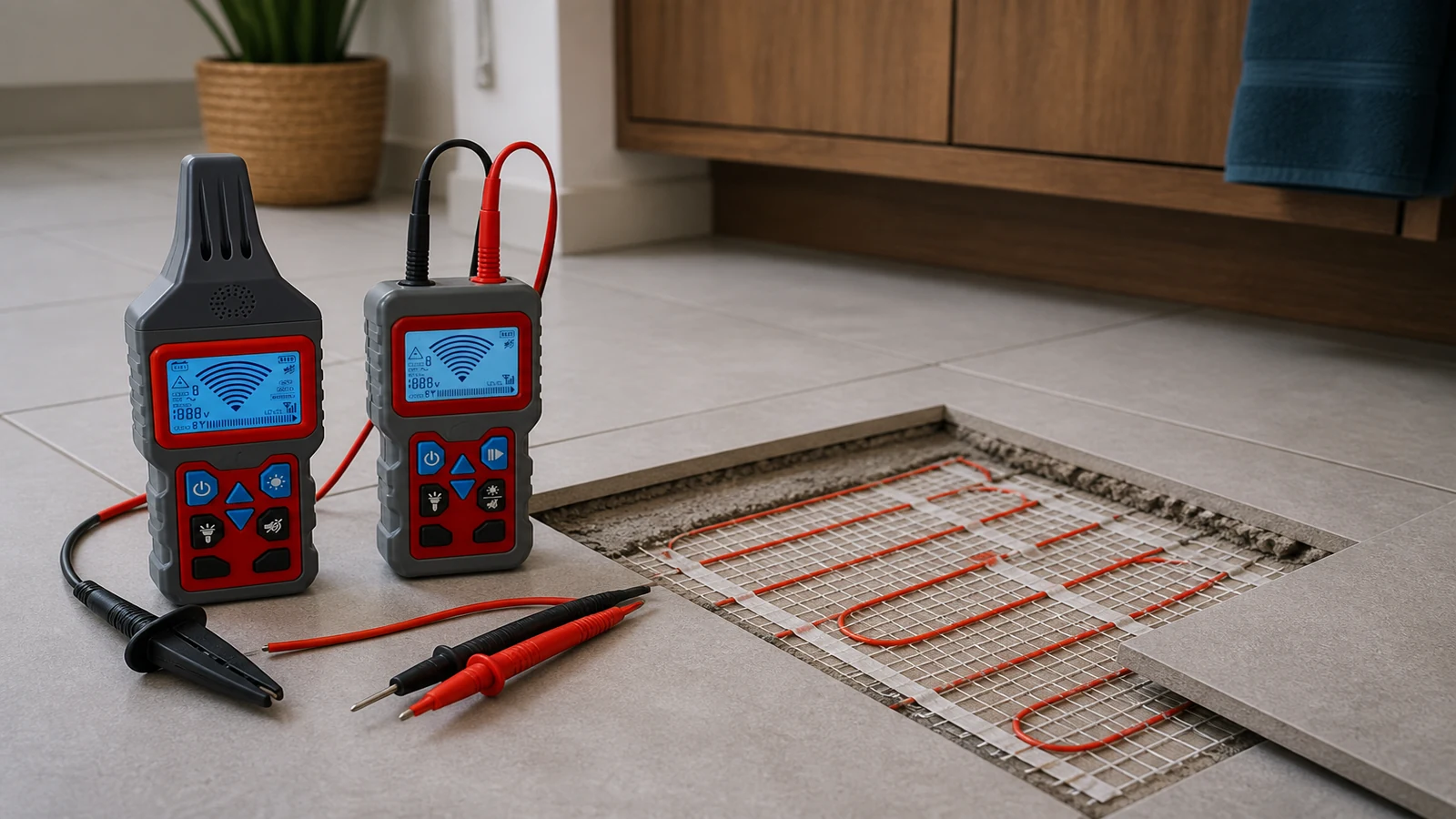
Underfloor Heating Cable Fault Finder Guide for UK Homes
Short answer: underfloor heating cable faults need careful electrical testing before any floor is lifted. Isolate the circuit, avoid live fault-finding, and use a qualified electrician or heating specialist for mains-powered systems and insulation resistance checks.
Garden wire tracing is about narrowing the risk before you cut, aerate or dig. Mark what you know, isolate what you can and avoid unknown buried services.
Symptoms of an underfloor heating cable fault
Dog fence and robot mower boundary wires can sit shallow enough for aerator tines, edging tools or spades to damage them. Mark the route with flags or paint before the lawn work starts.
Why isolation comes first
Use installation sketches, base-station routes, connector positions and visible joins to build a likely path. A tracer can help, but it does not make unknown services safe to dig around.
Tests a qualified person may carry out
Rain-related garden lighting faults often point to wet joints, damaged insulation or water inside fittings. Isolate power before inspection, especially on mains-voltage outdoor circuits.
Narrowing the fault before lifting flooring
For robot mower faults, a temporary test loop can confirm the base station and mower before you start lifting turf. Then divide the boundary into smaller sections to narrow the break.
Repair limits and when replacement is wiser
Underfloor heating and mains garden circuits need qualified testing. Insulation resistance and fault location should be handled before any floor or ground is opened.
Quick buying checklist
- Switch off the system before handling wires.
- Mark the known route with flags or spray.
- Use a temporary loop for mower boundary faults.
- Avoid digging near unidentified services.
- Use a qualified electrician for mains circuits.
FAQ
Is this a job for a beginner?
Some visual checks are beginner-friendly, but electrical, LPG, buried-service and car diagnostic work can become unsafe quickly. Stay with inspection-level checks unless you are competent and have the right equipment.
What should I check before buying a tool or accessory?
Check the product instructions, the job you actually need to do, and whether the item matches your vehicle, appliance, clothing use, garden system, brew-day setup or burner arrangement. If the fit or rating is unclear, pause rather than guessing.
Final buying advice
Good tracing reduces unnecessary digging. When the route or voltage is uncertain, treat the area as unknown until it is properly located.